
Product insights
Mastercard AN4569 Compliance: A Complete Guide for Banks
Mastercard AN4569 compliance requires card issuers in 47 European countries and territories to show cardholders who they actually paid, instead of the short description that arrives from the acquirer. The rule has been binding since 14 October 2023, and Visa's equivalent requirement takes effect on 23 January 2027.

Product insights
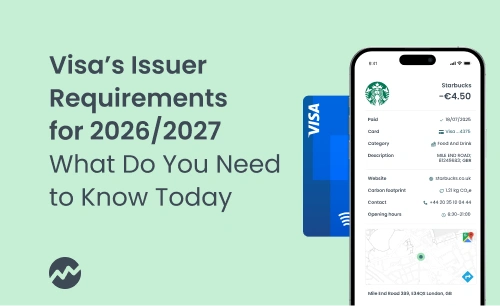
Visa Mandate 2027: What Issuers Must Do
Visa has announced a series of mandates updating how banks and fintechs manage transaction data, cardholder controls, and recurring payments. The changes follow similar regulatory steps taken by Mastercard and aim to improve transparency, consumer trust, and digital control in the European payment ecosystem.

Product insights
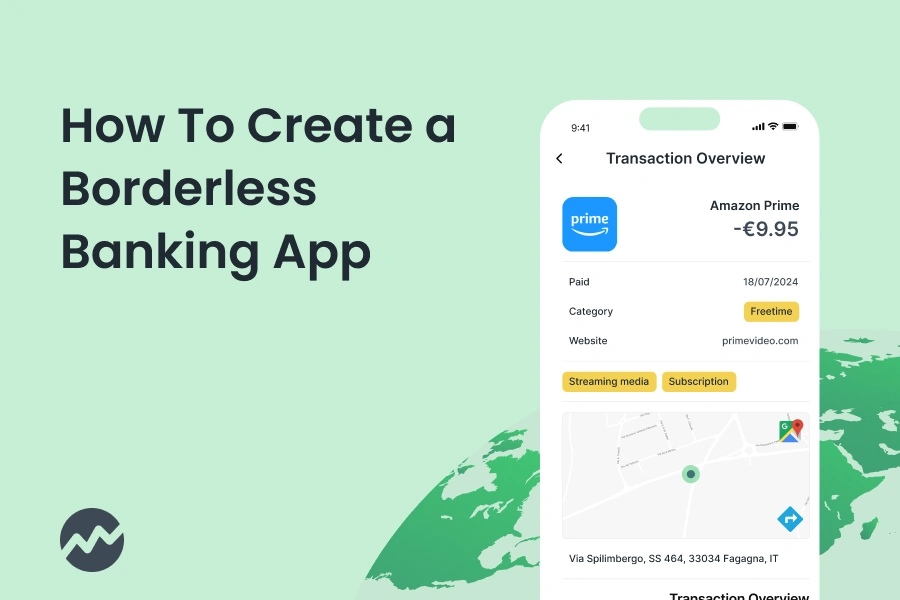
What a Borderless Banking App Needs From Payment Data
A banking app that works perfectly at home can fall apart on the first foreign payment. The domestic feed works because the same merchants repeat week after week - the supermarket, the transport operator, the coffee place near the office. The moment a customer lands abroad and taps their card, that repetition disappears, and the app has to answer a harder question from a single transaction record. This is a build guide for tier 1 banks: which fields a transaction record has to carry abroad, and what a borderless banking app can show once it carries them.

Product insights
Subscription management solutions: 4 options for banks explained
"Subscription management" means four different things to four different banks - a simple list, a forecasting overview, a control button, or a security audit. Each serves a distinct motivation and draws on a distinct data source. This article breaks down all four solutions, what each is worth to the customer, and how to weigh them before committing engineering effort.
Product insights
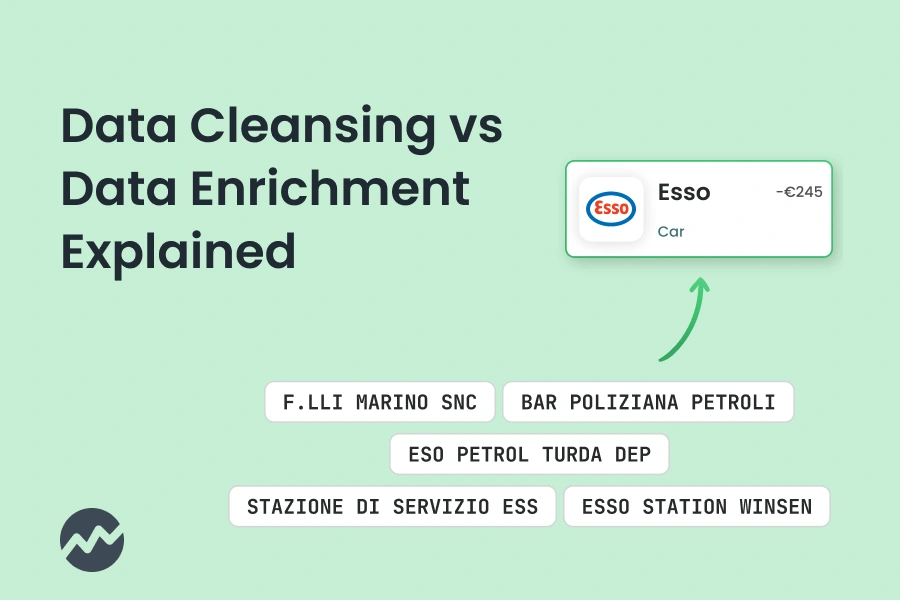
Data cleansing vs Data enrichment: Why your bank needs both
You want to build a subscription manager, a spending overview, or an affordability model - and the transaction feed hands you a terminal string that reads like a licence plate. Getting from that raw string to a shop a customer recognises takes two separate operations: cleansing and enrichment. Here's what each one does, which one your feature actually depends on, and how it holds up across card, SEPA and open banking data.
Product insights
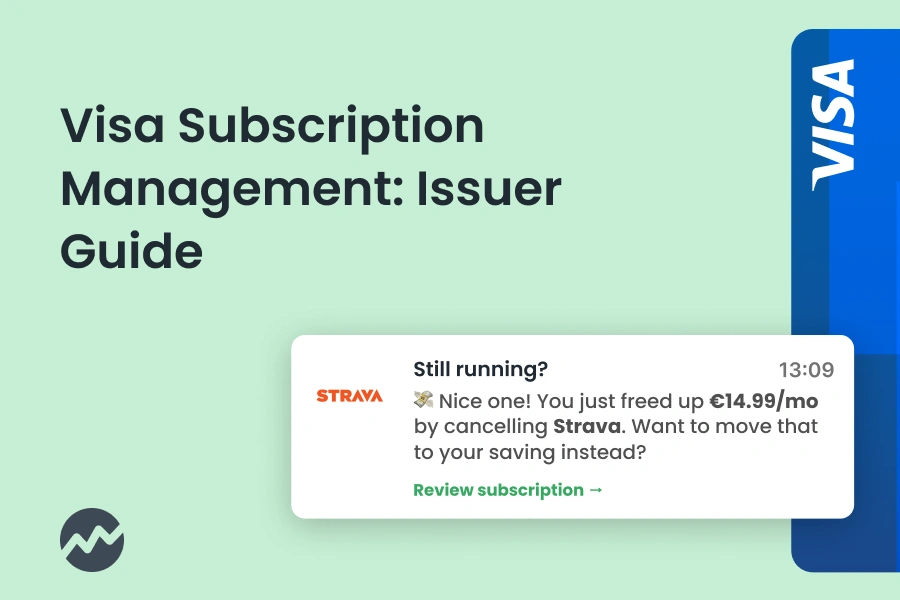
Visa Subscription Management Mandate: A Complete Implementation Guide for European Issuers
Visa subscription management mandate has been in force since 18 April 2026 across 13 European markets, and the question for product teams has moved from whether to build subscription management to how to build it correctly. The full mandate overview covers all three of Visa's 2026/2027 requirements; this article focuses only on and what it takes at the implementation level. The rule asks issuers to do three things: identify and label three recurring transaction types, enable merchant-level stop instructions with the correct decline responses, and inform cardholders that cancelling a card charge does not end their contract with the merchant. None of these are unreasonable. Each one, though, depends on the quality of the transaction data sitting underneath the interface.
Product insights
Merchant Name Inconsistency in Transaction Data: Why It Happens and How to Fix It
Merchant name inconsistency seems to be the rule in raw transaction data. A single global brand can appear as twenty or more distinct strings in a bank's transaction feed. Same merchant. Same card. Sometimes the same store on the same day. The descriptors land differently anyway. It is a structural property of how card payments work, and any product built on top of unresolved transaction data inherits the inconsistency by default.
Product insights
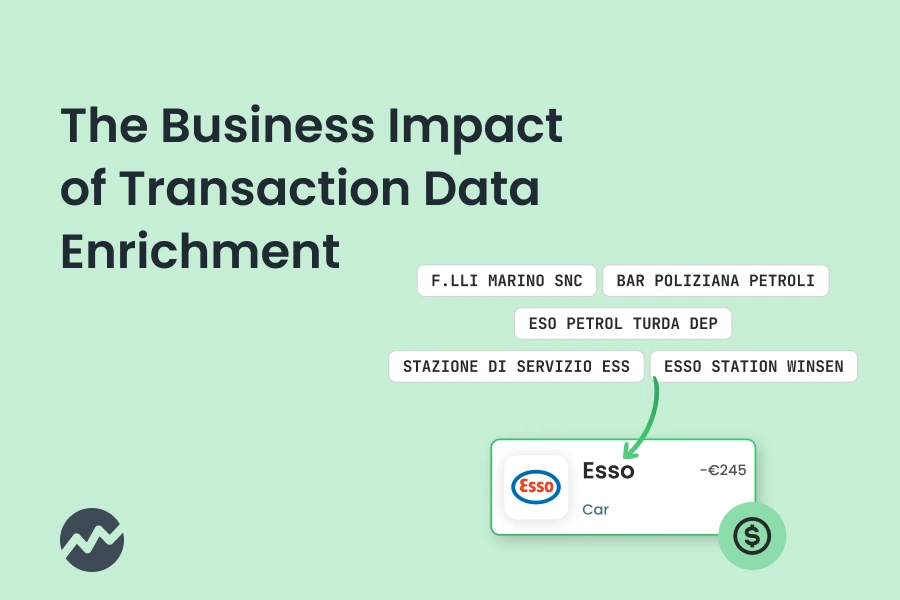
The Business Impact of Transaction Data Enrichment
A mid-sized European retail bank with 5m active card customers sees around 1,5bn card transactions a year - every purchase a data point on where the customer shops, what they spend on, and how their habits shift over time. The raw material for almost every personalised banking product sits in that feed. The question is not necessarily about access, more like whether the data, once you reach for it, is usable enough to build on - clear enough for customers, structured enough for analytics, consistent enough for credit and risk models.
Product insights
Almost every Second ATM in Prague Belongs to Euronet: Withdrawals, Fees and Solution
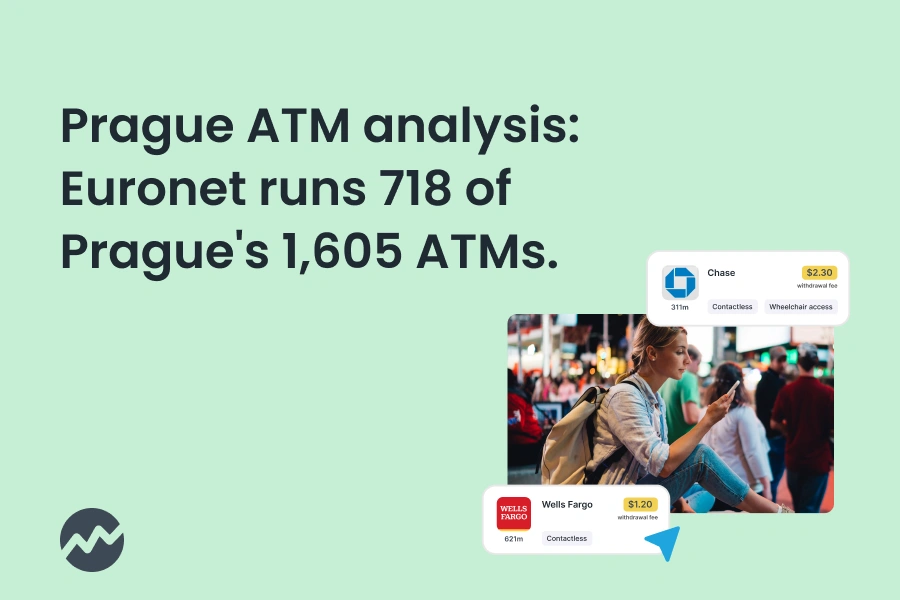
Withdraw cash from the wrong ATM in central Prague and you can pay tens or hundreds of crowns more than you should. Independent operators like Euronet apply withdrawal fees that vary by card type and country of issue, with foreign cards consistently charged the most. The fees are not the only problem - it's the density of these ATMs and the lack of clear information about them that turns an ordinary cash withdrawal into a costly guessing game.
Product insights
What Is Google Places ID and How It Improves Transaction Data
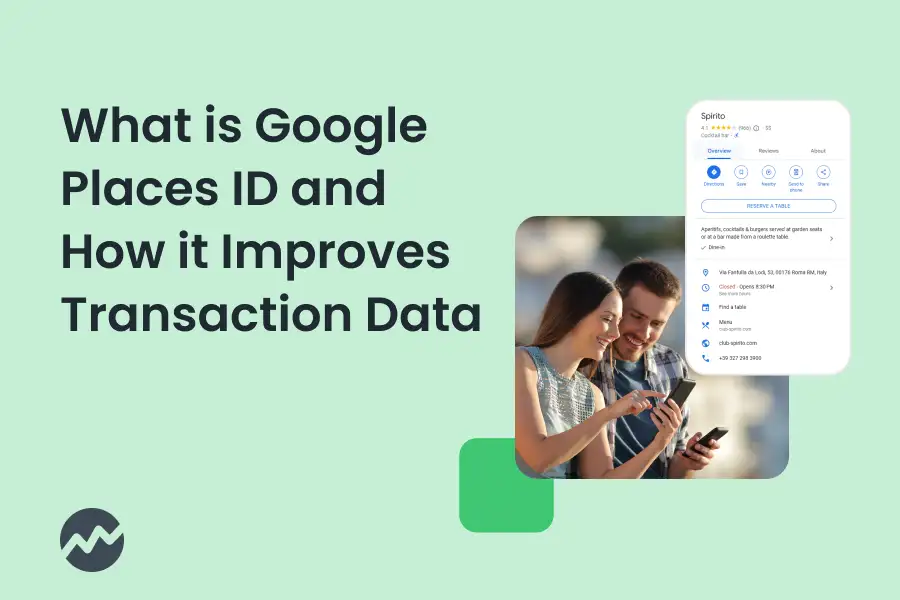
Every card payment generates a transaction record. But if you look at the raw data behind that record, you'll quickly notice a problem: the location information it contains is almost never specific enough to tell you where the customer actually was.
Product insights
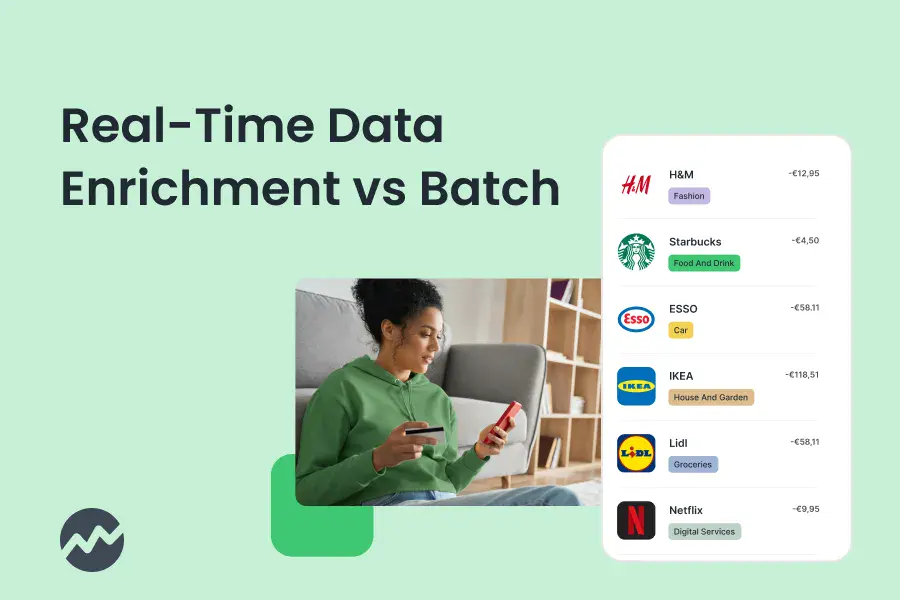
Real-Time Data Enrichment vs Batch: What Banks Need to Decide First
The timing of transaction enrichment determines which digital banking features a bank can realistically deliver. Getting this architectural decision right is not a backend concern - it is a product strategy decision.
Product insights
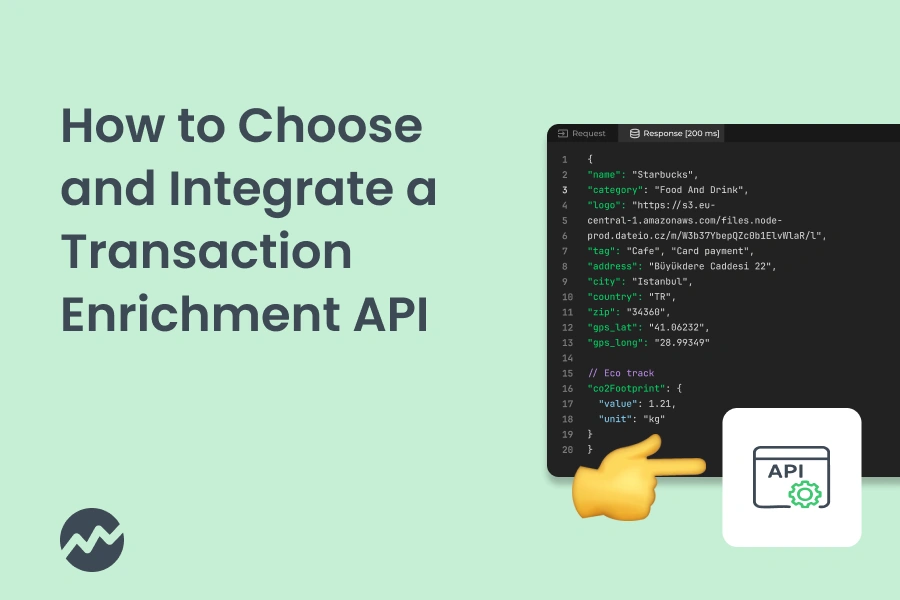
How to Choose and Integrate a Transaction Enrichment API
Most integration failures don鈥檛 happen because the API is bad. They happen because the bank treats enrichment like an additional tweak instead of a structural layer inside its transaction system. If you integrate a transaction enrichment API properly, it becomes part of your transaction infrastructure.
Product insights
Build, Don鈥檛 Just Display: 14 Banking Solutions Influenced by Transaction Data Quality
Banks spent years treating transaction data quality as something to show. A list, a balance change, maybe a PDF statement. Now the better ones treat transaction data as something to build on: Year-in-Review recaps, subscription controls, advanced PFM, loyalty targeting, carbon footprint views. Yet the market is all over the place.

Product insights
How Subscription Management, Data, and Recurring Payments Drive Customer Lifetime Value
Subscription management used to be simple. You paid monthly for entertainment, maybe a gym membership, and that was the end of it. Now it鈥檚 everything. You don鈥檛 stick with a bank because the logo feels comforting or the branch is on your street. You stick because the bank becomes the default place where your financial routine works. Salary comes in. The same bills go out. The same services are renewed. After a month, your account turns into a quiet system that runs your life in the background.
Product insights
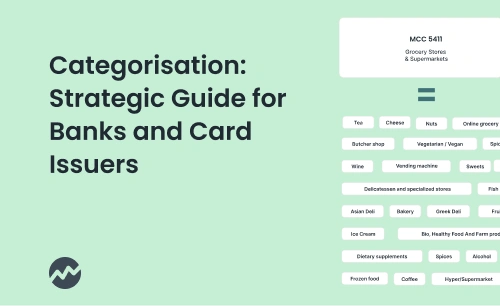
Financial Transaction Classification Categories: A Strategic Guide for Banks and Card Issuers
For banks, digital banks, and credit card companies, accurate transaction categorisation sits at the core of customer experience, analytics, compliance, and revenue optimisation. As consumers expect real-time insights and regulators demand clearer reporting, classification quality and proper transaction classification categories have become a competitive differentiator.
Product insights
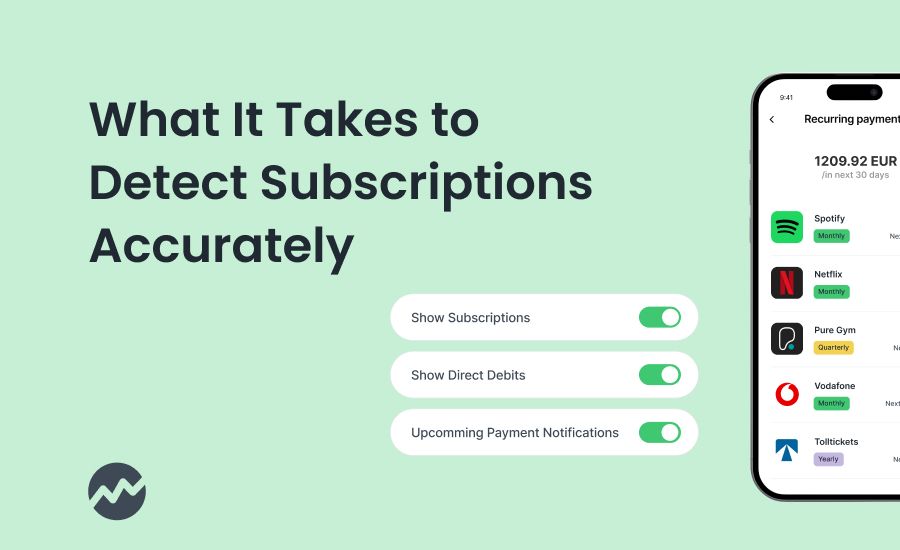
Detection Solutions for Subscriptions: What Accurate Identification Really Requires
Short answer: accurate transaction data. Long answer: accurate transaction data plus the ability to treat different payment behaviours as different problems. That is the core of any true detection solution when it comes to subscriptions. Most banking apps still process transactions as one big, flat stream. But in real life, customers experience spending in three distinct ways...
Product insights
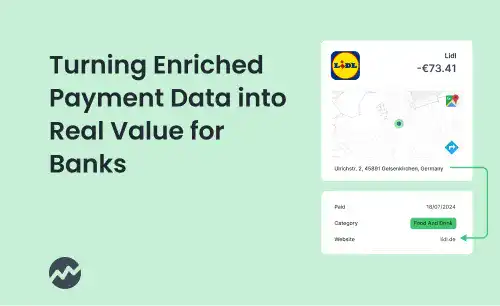
Turning Enriched Payment Information into Real Value for Banks
Enriched Payment Information works for banks and customers alike. By transforming unclear transaction codes into meaningful insights, banks earn customer trust, reduce costs, and build engagement that lasts. This technology turns a banking app into a smart financial companion that guides customers and strengthens loyalty.
Product insights
Unlocking Efficiency and Cost Savings with Payment Data Enhancement
Today, Payment Data Enhancement is integrated into almost all strategic operations. By ensuring that every transaction is accurate, complete, and intelligently validated, organisations can scale payments efficiently, reduce operational costs, and improve customer experience.